Waste Today: What role do alternative engineered fuels play in the waste industry?

This article originally published in Waste Today: https://www.wastetodaymagazine.com/article/alternative-engineered-fuels-divert-materials-from-landfill/
Every industrial and commercial operation generates waste streams that do not fit neatly into traditional recycling. These include mixed plastics, manufacturing byproducts, compactor waste, contaminated packaging and damaged or returned goods. For many years, these waste streams had few destinations outside the landfill. Reuse markets and waste-to-energy (WTE) fill part of the void, but for a company pursuing true landfill diversion, neither solution solves the problem.
One landfill diversion solution that has been gaining momentum among waste generators is alternative engineered fuels (AEFs). AEFs reuse 100 percent of the waste material, and they benefit waste generators and industrial fuel users alike.
AEFs, also called refuse-derived fuels, are produced from nonhazardous industrial and commercial waste that typically has no other reuse or recycling outlet. Waste materials are processed to size and engineered to a predetermined fuel specification. With the right blend of waste profiles, these fuels have an equivalent BTU (British thermal units) value to the fuels they replace, such as coal, petroleum coke and natural gas.
For waste generators, AEFs are a critical outlet that makes zero-waste-to-landfill a possibility. For cement kilns and industrial fuel consumers, AEFs represent a sustainable, domestic fuel source that reduces dependence on fossil fuels and supports their own sustainability goals. That combination of diversion value and market need is why AEFs are becoming a standard fixture in waste programs rather than a niche solution.
Alternative fuels solve two problems with one solution. Waste generators get a landfill diversion pathway for nonrecyclable waste streams, and cement manufacturers get a reliable, on-spec fuel that replaces coal and natural gas. It’s a win-win for sustainability for both sides of the equation. -- Chad DeGraffenreid, CEO of SES

How AEFs are made
Chesterfield, Missiouri-based SES has been producing alternative fuels since 2017, having diverted more than 400,000 tons of waste from landfills using this method and others.
The company has six zero waste facilities in the United States, with expansion plans for later this year. These zero waste facilities accept waste directly from generators, process the waste to spec and create fuel for cement kilns, industrial boilers and other AEF users.
The U.S. Environmental Protection Agency recognizes materials like AEFs as nonhazardous secondary materials under 40 CFR Part 241, provided the fuel meets criteria for heating value, contaminants and commodity-grade handling. That regulatory recognition is part of what separates AEFs from traditional waste disposal. After the conversion process, the waste is reclaimed and reclassified as a new material entirely.
AEFs work differently from WTE facilities, which feed mixed waste materials, including municipal solid waste, directly into a combustor to generate electricity or heat. WTE recovers energy and reduces the volume of material sent to landfill, it also produces an ash byproduct equivalent to up to 25 percent of the original waste stream. This residual ash typically requires off-site landfill disposal.
With AEFs, waste is engineered to a predetermined specification before it reaches the kiln, and the resulting fuel is designed for a specific end use where its ash becomes a raw material rather than a residual.
In a cement kiln, ash is incorporated into the clinker itself, the material that becomes finished cement. The AEF process treats waste as a feedstock for a fuel product with its own specification and market.
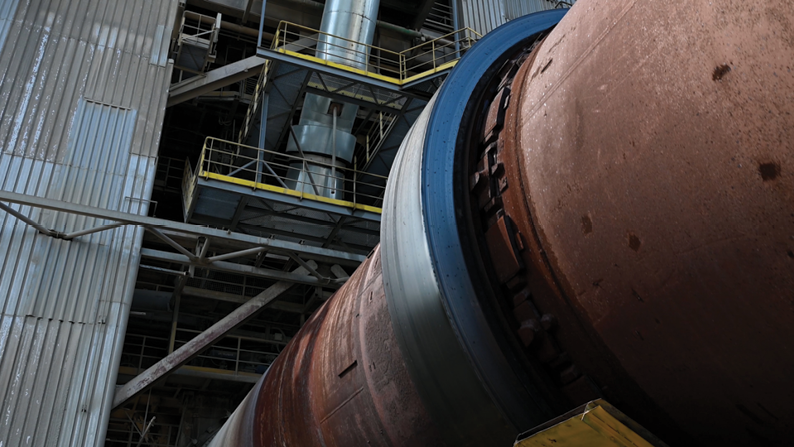
Cement kilns are the largest industrial market for AEFs, and they are specific about what they will burn. Cement industry data shows solid recovered fuel destined for kiln use generally needs a net calorific value above 14 megajoules per kilogram, with better-quality material running higher. AEFs as a category span roughly 16–30 megajoules per kilogram compared with bituminous coal’s 25–30 megajoules per kilogram range. However, a well-engineered AEF can reach and exceed coal’s heat value.
Moisture and ash content matter just as much as heat value. Kilns typically want moisture below 15 percent and ash content below 10 percent, along with limits on chlorine and sulfur, which can corrode kiln components and disrupt clinker integrity. Particle sizing is important too: Material fed into a kiln’s main burner generally needs to be under 50 millimeters, finer still for injection at the calciner.
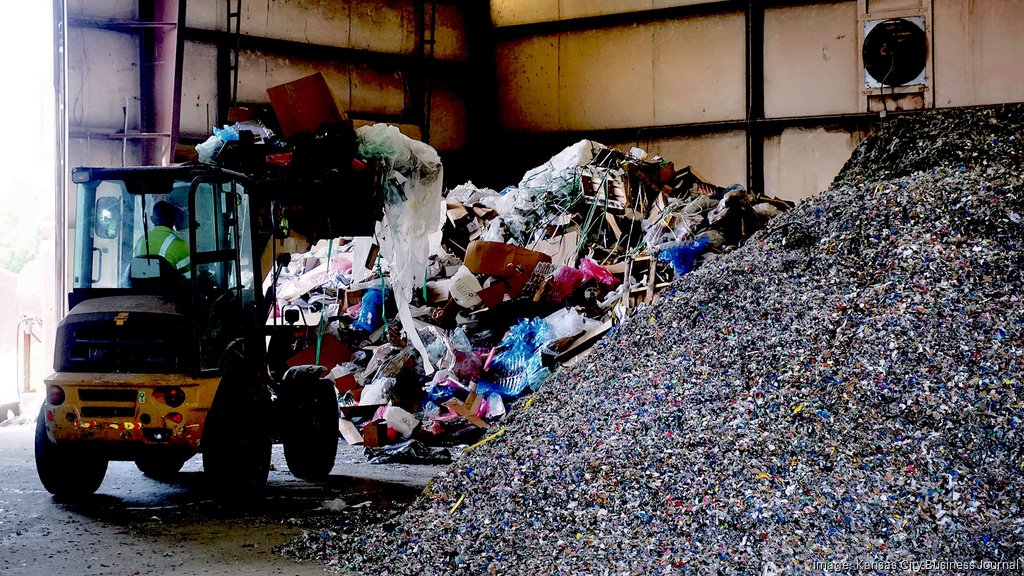
Getting fuel to spec requires several processing stages, starting with sorting to remove metals, glass and noncombustibles; shredding to reduce particle size; and blending to remove variability between loads. With fuel fed around the clock, kiln operators require consistency and a preapproved profile.
Additionally, a preapproved profile provides reliability for companies that generate high-volumes of waste and need landfill diversion at scale.
Benefits for waste programs
For waste generators pursuing zero waste to landfill, AEFs solve a persistent problem: What happens to waste streams that have no recycling or beneficial reuse outlet? Mixed plastics, contaminated recyclables, off-spec materials, compactor waste and general nonrecyclables all fall into this category. Without a viable diversion outlet, most of these materials are headed to the landfill.
AEFs fill the gap between recycling and landfilling. This option gives waste generators a verified landfill diversion pathway without requiring them to meet industrial fuel specifications standards themselves.
For many years, the primary objection to landfill diversion was cost. Landfills were cheap and convenient. But rising tipping fees, high transportation costs and new regulations have changed that equation significantly.
In today’s market, many waste generators find AEFs to be cost-equivalent or cheaper than landfill disposal. The full cost comparison favors diversion when accounting for regulatory risk, remediation liability and brand liability when disposing brand-sensitive materials that require assured destruction verification.
Additionally, the level of material destruction is an added benefit to waste generators. Cement kilns burn fuel at temperatures as high as 2,700 F, and at that temperature, every part of the material is destroyed, including forever chemicals like per- and polyfluoroalkyl substances. This level of destruction is required for brand-sensitive materials, off-spec and returned products and intellectual property items.
Companies like SES provide assured destruction certificates and visual documentation for waste processed into fuel, giving waste generators the documentation they need to prove they are meeting their sustainability goals.
The AEF solution can be applied to packaged food waste reclamation as well. Companies like SES can depackage food waste and effectively separate organic materials from the packaging materials.
Organics are turned into compost and nutrient-rich soil, while the packaging is processed into AEFs, creating a 100 percent landfill diversion solution with documentation.


Industry benefits of AEFs
Cement manufacturing uses a lot of energy, and fuel is typically the industry’s largest controllable cost. Additionally, AEFs meaningfully reduce carbon emissions when compared with coal, with studies showing CO2 reduced by 30 percent. This is even more impactful when considering that the cement industry is responsible for 7 percent of global CO2 emissions, 40 percent of which originate from fuel consumption alone.
These realities are pushing U.S. cement manufacturers toward alternative fuel sources faster than in previous decades.
The American Cement Association (ACA) reports that alternative fuels make up roughly 14 percent of the fuel mix in the U.S. By contrast, European cement manufacturers use about 60 percent alternative fuels in their fuel mix.
The Washington-based ACA set a 2050 target of cutting coal and petroleum coke to 10 percent of the U.S. fuel mix, with alternative fuels expected to supply up to half the industry’s energy by that time. According to the association’s road map to carbon neutrality, alternative fuels “are a fraction of the current fuel mix and there is an opportunity to quickly scale up use to displace traditional fossil fuels.”
The road map notes that cement plants are equipped to use alternative fuel materials, provided the supply is available. ACA estimates that, with the right policies and regulations, alternative fuels could make up 50 percent of the industry’s fuel mix.
This ambitious goal will require a steady supply of on-spec fuel for many years to come. Companies like SES are expanding operations to accommodate the growing demand.
“We are seeing meaningful demand from both sides,” DeGraffenreid says. “U.S. manufacturers need landfill diversion. Cement producers need a clean alternative to coal. We started SES to solve exactly these kinds of problems, where one industry’s waste is another industry’s fuel.”
For waste streams with nowhere to go, there is a documented pathway to a second life. AEFs close the gap between recycling and landfilling, providing waste generators a verified landfill diversion solution and cement manufacturers with a fuel source they actually need. Alternative engineered fuels quickly are becoming standard practice for how industrial waste and industrial energy meet.
There has never been a better time to go zero waste. With the right partners, the right diversion outlets and the documentation infrastructure to back it up, 100 percent landfill diversion is an operational reality for any facility, waste stream or industry.
.png)
.svg)
%20(1).webp)